Description
Lungwort Herb — Benefits & Cautions
✅ Benefits of Lungwort
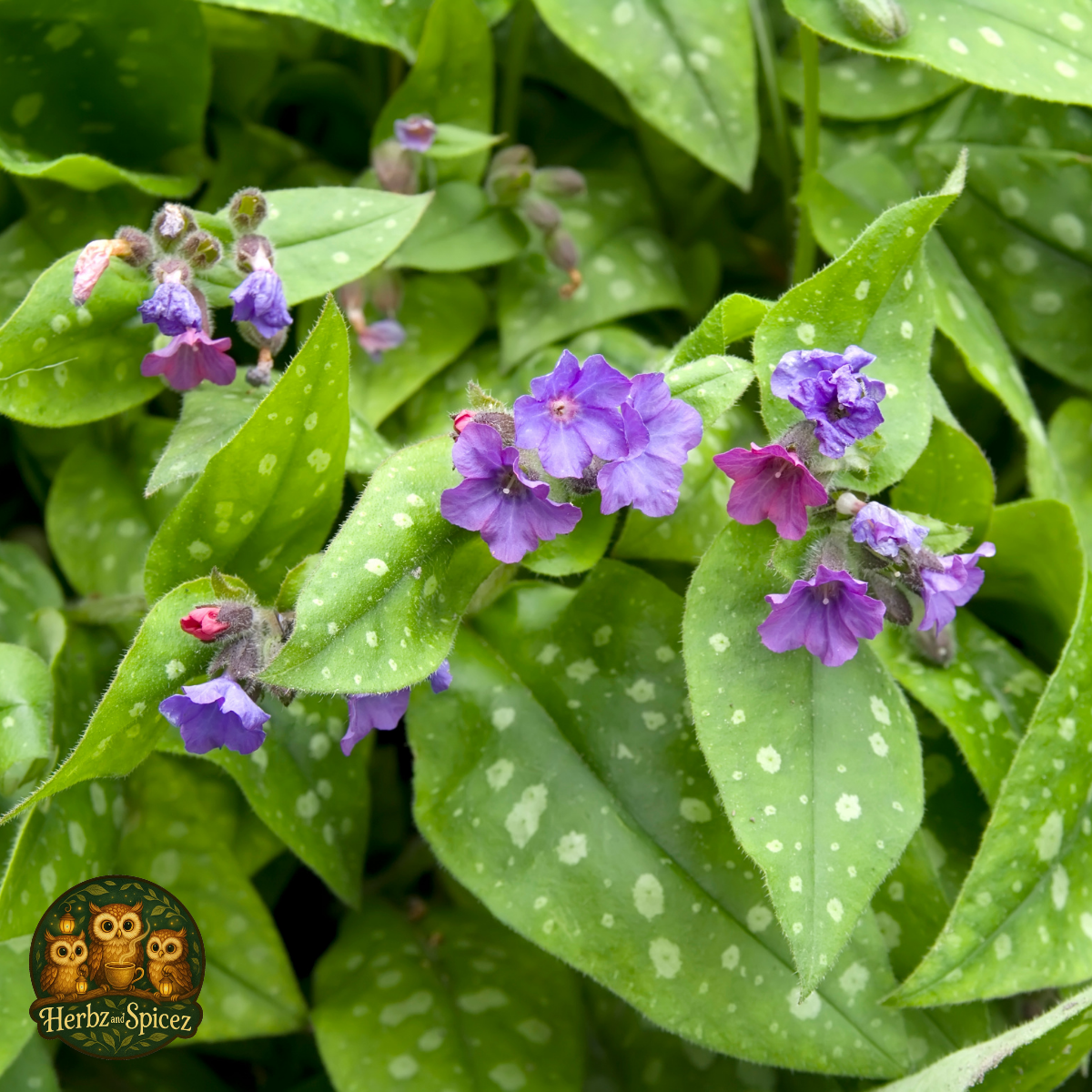
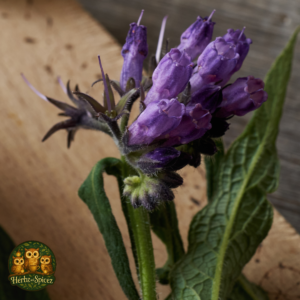
Lungwort has been used for centuries as a respiratory-supporting herb. Its spotted leaves even inspired the “Doctrine of Signatures,” suggesting it resembled lung tissue.
1. Respiratory Support
- Helps soothe irritation in the lungs and throat
- Useful for lingering coughs, hoarseness, and bronchial congestion
- Traditionally used for asthma-like tightness
2. Demulcent (Moistening) Action
- Contains mucilage that coats and soothes irritated mucous membranes
- Helpful for dry coughs, sore throats, and chronic dryness in the lungs
3. Mild Anti-Inflammatory
- May help reduce inflammation in upper respiratory pathways
4. Antimicrobial & Immune-Supporting
- Contains antioxidant constituents that may support immune response
- Historically used for infections of the lungs and upper respiratory tract
5. Astringent Properties
- Gently tightens tissues
- Can help reduce excessive phlegm while still soothing tissues
⚠️ Cautions & Safety Notes
1. Low-Level Pyrrolizidine Alkaloids (PAs)
Lungwort may contain small amounts of PAs, which in large or prolonged doses can stress the liver.
Avoid or limit if:
- You have liver conditions
- You are using multiple PA-containing herbs
- You plan to take it daily for extended periods
Short-term, moderate use is generally considered safe.
2. Pregnancy & Breastfeeding
- Traditionally not recommended due to the potential PA content
- Safety data is limited → best avoided during pregnancy or lactation
3. Chronic Health Conditions
Use caution if you have:
- Liver disease
- Blood clotting disorders (due to astringent effect)
4. Medication Interactions
Lungwort is not known for major drug interactions, but use caution with:
- Liver-processed medications (due to possible PA load)
- Strong diuretics (mild drying/astringent action may add to this)
5. Allergies
- People sensitive to plants in the Boraginaceae family (borage, comfrey) should avoid it
- Rare but possible skin reactions if handled fresh
🌬️ How It’s Traditionally Taken
Tea / Infusion:
- 1–2 tsp dried herb per cup
- Steep 10–15 minutes
- Used up to 3× daily for short periods
Tincture (if used):
- Often combined with other lung-support herbs like mullein, marshmallow, elecampane, or plantain
🌿 Quick Summary
Best for:
- Soothing dry coughs
- Irritated lungs and throat
- Chronic dryness
- Gentle lung inflammation
- Immune support in respiratory infections
Caution with:
- Pregnancy/lactation
- Liver issues
- Long-term high-dose use
- Boraginaceae allergies

Reviews
There are no reviews yet.